
Sustainable specialty coffee: what you need to know
In a world increasingly focused on environmental and social responsibility, sustainable specialty coffee has become an unmissable trend. Behind every cup of delicious coffee lies not just flavor but a story of efforts to protect the planet, support communities, and ensure sustainable livelihoods for farmers. But do we fully understand the true meaning of sustainability? Join XLIII Coffee as we explore the key aspects of sustainable coffee and explain why it is becoming the new standard for the global coffee industry.
I. The Concept of Sustainable Specialty Coffee
Defining Specialty Coffee
With growing attention to quality in the diverse world of coffee, the Specialty Coffee Association (SCA) defines specialty coffee as one that meets stringent quality standards. For coffee to be recognized as “specialty,” it must pass rigorous criteria concerning bean attributes. Compared to regular coffee, specialty coffee offers a more refined experience with a wide range of flavors.
What is Sustainable Specialty Coffee?
Sustainable specialty coffee refers to coffee grown and produced using eco-friendly methods that minimize negative environmental impacts while ensuring fairness for workers and communities. Unlike monoculture coffee farming, which often causes deforestation, soil erosion, and water pollution, sustainable coffee production aims to have a positive impact on both the environment and society. By conserving natural resources and promoting biodiversity, sustainable coffee helps maintain ecological balance and wildlife habitats. Additionally, it guarantees fair wages and working conditions for laborers, supports community development, and promotes social equity.

Sustainable specialty coffee refers to coffee that is grown and produced using methods that conserve ecosystems, minimize negative environmental impacts, and ensure fairness for workers and communities in every aspect.
II. The Trend Toward Sustainable Coffee Production
The Rise of Sustainable Coffee Production
The movement toward sustainable coffee production emerged in the late 20th century when issues such as climate change, environmental degradation, and inequality in the coffee supply chain became more evident. Initiatives like Fair Trade and Rainforest Alliance in the 1980s and 1990s ensured that coffee farmers received fair prices, used eco-friendly practices, and improved working conditions. These certifications laid the foundation for a shift in how coffee is produced and consumed globally.
Positive Changes in Recent Years
What started as a niche concept has now become an integral part of the coffee industry. A major driver behind this positive transformation is the growing awareness of consumers regarding climate change and resource exploitation. Consumers today not only seek high-quality coffee but also want it to be sustainably sourced and socially responsible.

Sustainable coffee production is based on balancing environmental, social, and economic priorities.
Additionally, stakeholders in the coffee supply chain recognize the importance of environmental and social factors for the stability and progress of the industry. Companies are investing in improving production and harvesting methods to boost quality while reducing environmental impact.
Technological advancements also play a key role in sustainable coffee production. Farmers use technologies like sensors and data analytics to manage water, fertilizers, and pesticides more efficiently, minimizing waste and environmental harm. Blockchain technology is being used to enhance supply chain transparency, allowing consumers to track the origin and production conditions of their coffee.
III. The Value of Sustainable Coffee
Sustainability in Production
Sustainable coffee production focuses on adopting eco-friendly farming practices that reduce negative impacts on nature and ecosystems. This includes minimizing the use of pesticides, conserving water, and protecting biodiversity. Shade-grown coffee, for example, is a sustainable method where coffee plants are grown under larger trees, helping maintain biodiversity, prevent soil erosion, and reduce deforestation. Farms in Colombia and Peru have adopted these methods, which not only increase productivity but also contribute to forest conservation and climate change mitigation.
Sustainability in Business
Sustainability in the coffee business means ensuring that production and trade benefit the communities involved in the supply chain, including fair wages for farmers and improved working conditions. Businesses like XLIII Coffee adhere to these principles by collaborating with farms like Finca La Palestina and Nueva Alianza, which practice environmentally friendly and socially responsible farming methods.
Sustainability in Consumption
Consumer behavior is shifting as more people seek products that are not only high in quality but also have a positive impact on the environment and communities. Sustainable coffee consumption reflects this trend, with customers choosing products with clear origins and transparent production practices.
XLIII Coffee delivers premium specialty coffee with a focus on human values and nature. Each cup represents the story of the hard work and dedication behind its production, helping consumers become more mindful and responsible in their purchasing decisions.

Sustainability in coffee production focuses on implementing eco-friendly farming practices that reduce negative impacts on nature and ecosystems.
IV. Sustainable Transition in the Coffee Industry
Shifting Farming Methods
Sustainable transitions begin with eco-friendly farming methods that reduce environmental impact and improve farmers’ livelihoods. Techniques like organic farming and shade-grown coffee help protect land and water resources while maintaining biodiversity.
Improving Supply Chains
The sustainable coffee supply chain is becoming more transparent and equitable. Companies are increasingly committing to purchasing coffee from certified sustainable farms, ensuring fair prices and good working conditions for farmers.
The Role of Technology
Technology is playing a significant role in the sustainable transition of the coffee industry. Sensors and resource management systems help farmers optimize water use and fertilizer, reducing waste and environmental damage. Additionally, AI and big data support businesses in predicting market trends, optimizing supply chains, and mitigating risks related to climate change.

The transition to sustainability starts with adopting sustainable farming methods, which help reduce environmental harm and improve the living conditions of coffee farmers.
Conclusion
Sustainable coffee is not just a trend; it is a necessary direction that brings real benefits to both the environment and communities. By choosing sustainable specialty coffee, we are not only enjoying a refined flavor but also contributing to protecting the planet and improving the lives of coffee farmers. Selecting sustainable coffee from brands like XLIII Coffee is a small but meaningful step toward positive change for the future.
V. FAQs
1. What is sustainable coffee, and why is it important?
Sustainable coffee is grown and produced using methods that conserve the environment and ensure fairness for workers and communities. It is important because it helps protect natural resources, improves farmers’ living conditions, and minimizes negative environmental impacts.
2. Which certifications guarantee that coffee is produced sustainably?
Certifications like Fair Trade, Rainforest Alliance, and Organic guarantee that coffee is produced using sustainable practices that protect the environment and ensure fair treatment of farmers.
3. How does XLIII Coffee support sustainable coffee production?
XLIII Coffee collaborates with farms that share a vision of sustainability, such as Finca La Palestina and Nueva Alianza. These farms practice environmentally friendly and socially responsible farming methods.
4. What commitments does XLIII Coffee make regarding transparency in its production process?
XLIII Coffee maintains transparency about its sourcing, including purchase prices, producer information, and farming conditions. They also use eco-friendly packaging and energy-efficient roasting machines to reduce environmental impact.
5. How is sustainable specialty coffee different from regular coffee?
Sustainable specialty coffee meets high-quality standards and is produced using methods that protect the environment and ensure fairness for workers, making it different from regular coffee in terms of both quality and social impact.

Bài viết mới

- Find the Origin
Mandela coffee variety – A convergence of generations from a masterpiece breeding strategy
Amidst the constant fluctuations of the era, Mandela emerges as a gentle yet resilient response from the soil. Instead of attempting to alter or impose upon nature, this breeding strategy is, in essence, a profound act of listening. Each Mandela coffee bean carries the bloodline of multiple generations, possessing both the serene, steadfast nature of native trees and the sparkling elegance of premium varieties. It is a sacred continuation, where the flow of generations ultimate honors the original value of the species, imparting an intact and sustainable vitality into every cup.


- Taste the Origin
Nigussie Nare – Murago Outgrowers #03028: Cultivated from the Values of Sustainable Reciprocity
Nestled beneath the shade trees of Sidama, Bensa, the Nigussie Nare – Murago Outgrowers #03028 coffee lot serves as a living testament to the values of sustainable reciprocity. This symbiosis begins with the intimate bond between a rich indigenous ecosystem and the smallholder farmers of the Murago region. Each harvested bean is the culmination of a virtuous cycle: a stable environment produces exceptional bean quality, and sustainable economic growth, in turn, continues to protect the verdant canopy of the great forest.

- Taste the Origin
Rift Valley Coffee Caucus #03757 – A Testament to Western Kenya’s Collective Spirit
Turning our gaze to the Great Rift Valley of East Africa, the fertile volcanic landscapes are witnessing an inspiring transformation. Moving away from fierce, survival-driven competition, smallholder farmers in Western Kenya have chosen to join forces, forging a resilient and unified network. The Rift Valley Coffee Caucus #03757 lot stands as the ultimate testament to this remarkable collective synergy.

- Breaking News
Airworks Coffee & XLIII Coffee – A “handshake” that brings original flavors across borders
XLIII Coffee, alongside our key wholesale partner Airworks Coffee, officially announces the latest release of specialty coffee lots for the North American market. This event reaffirms our commitment to bringing original flavors across all geographical barriers to coffee enthusiasts.
Early access (for Subscribers of Airworks): 10:00 AM (PST) | Wednesday, April 29, 2026
General access: 10:00 AM (PST) | Friday, May 1, 2026
We invite our Customers and Partners to visit (airworkscoffee.com) for detailed information and to prepare for this special release!
- Taste the Origin
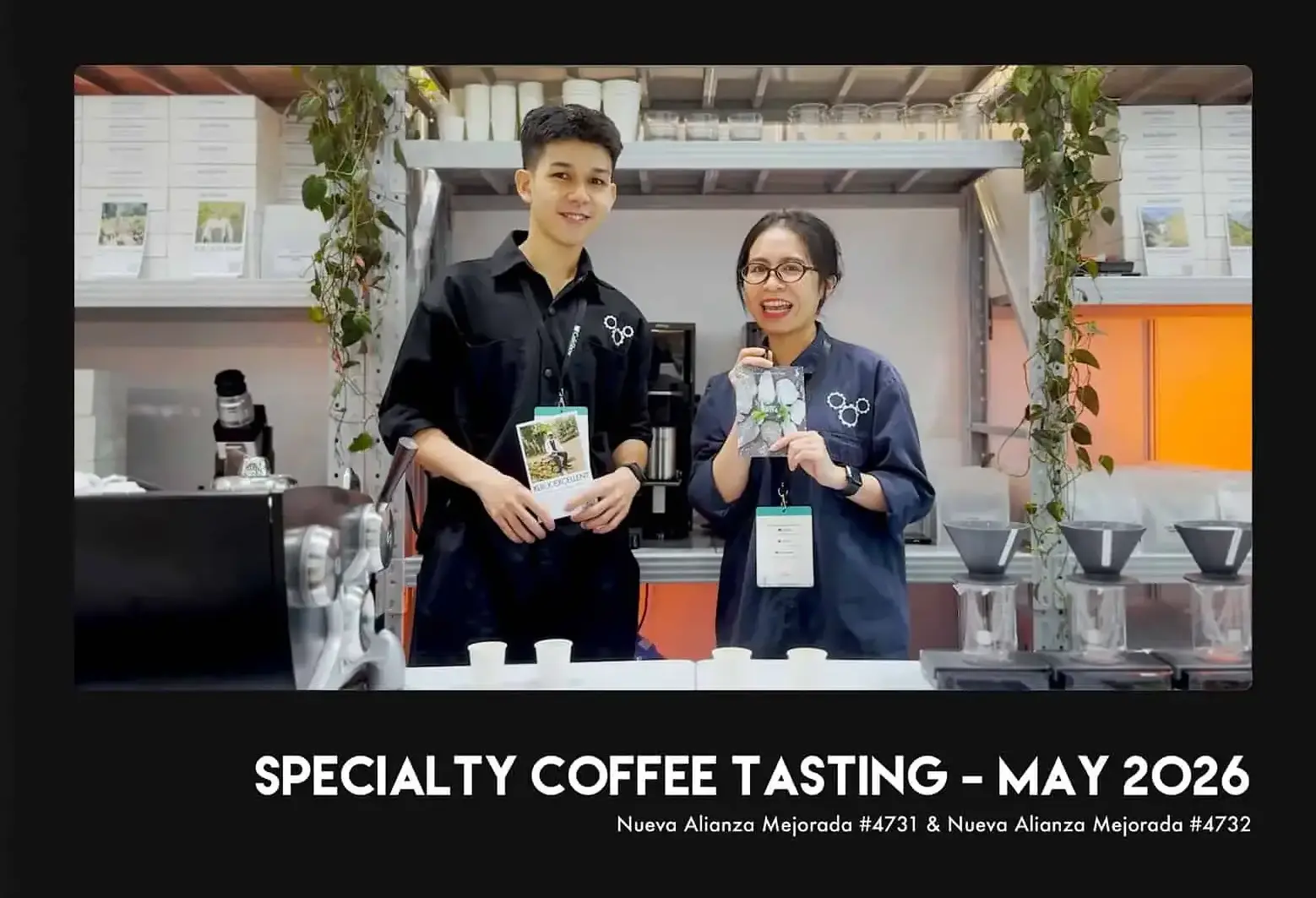
Unveiling May Discovery Subscription: Nueva Alianza Mejorada #4731 & Nueva Alianza Mejorada #4732
The Discovery Subscription is a silent dialogue, a place where the soul of the connoisseur finds a harmonious beat with distant lands. Like a transparent lens, we become storytellers, meticulously peeling back layers of cultural sediment, the breath of the soil, and the human philosophies hidden within every coffee bean.
May arrives with brilliant streaks of golden sunlight, a time when we long to hide beneath the lush, dew-drenched canopies of Santa Teresa. Amidst the silence of the Andes, when compassion touches Mother Earth, what will we hear? Perhaps it is a sweet response that nature reserves solely for souls who know how to wait patiently.

Specialty Coffee in Vietnam
BRAND VALUE
YOU SHOULD HAVE KNOWN
XLIII Coffee has been aiming to become a big, impactful company with social responsibilities,
have access to high-quality raw materials and convey the complete original values of coffee to our customer
